Shopping for a waterfront home or lot in Crane Hill and noticing big price gaps between places that look similar at first glance? You are not alone. Buying on a lake is different because the water itself creates unique benefits and risks that change value. In this guide, you will learn exactly what drives prices, how to compare lots fairly, and what to verify before you make an offer or list your property. Let’s dive in.
Six factors that set prices
Water depth
Water depth near the shore and at a dock shapes how you use the property. Deeper water supports more types of boats, safer swimming, and better access during seasonal fluctuations. Shallow frontage limits dock options and may require dredging, which adds cost and permitting complexity.
Buyers look for depth at the dock and 50–100 feet from shore, along with any history of drawdowns. Sellers can build trust by disclosing depth measurements and any prior dredging or shoreline work. Lots with deep water at the dock typically command higher prices because they offer more flexibility and long-term usability.
Lot slope
Slope affects build cost, access, and views. A gentle slope usually means easier construction and more usable yard, while a steep slope may add foundation, driveway, and septic costs. On the upside, a steeper lot can deliver panoramic views and privacy from the road. Flat lots at the water’s edge offer easy access but can be more flood-prone.
What buyers pay for is the balance. A higher view premium can offset some build costs when access remains manageable. Document the rise or drop across the lot and note any existing retaining walls or vehicular access.
Shoreline type
The shoreline’s stability and condition play a major role in both enjoyment and value. A natural, stable shore can look and feel more private with lower maintenance, while bulkheads or riprap offer stability but may be expensive to install or maintain. Eroding shorelines usually reduce marketability and value until repaired.
Any modification to the shore often requires permits from the reservoir manager and state or federal agencies. Buyers should budget time and cost for approvals before planning improvements.
View corridors
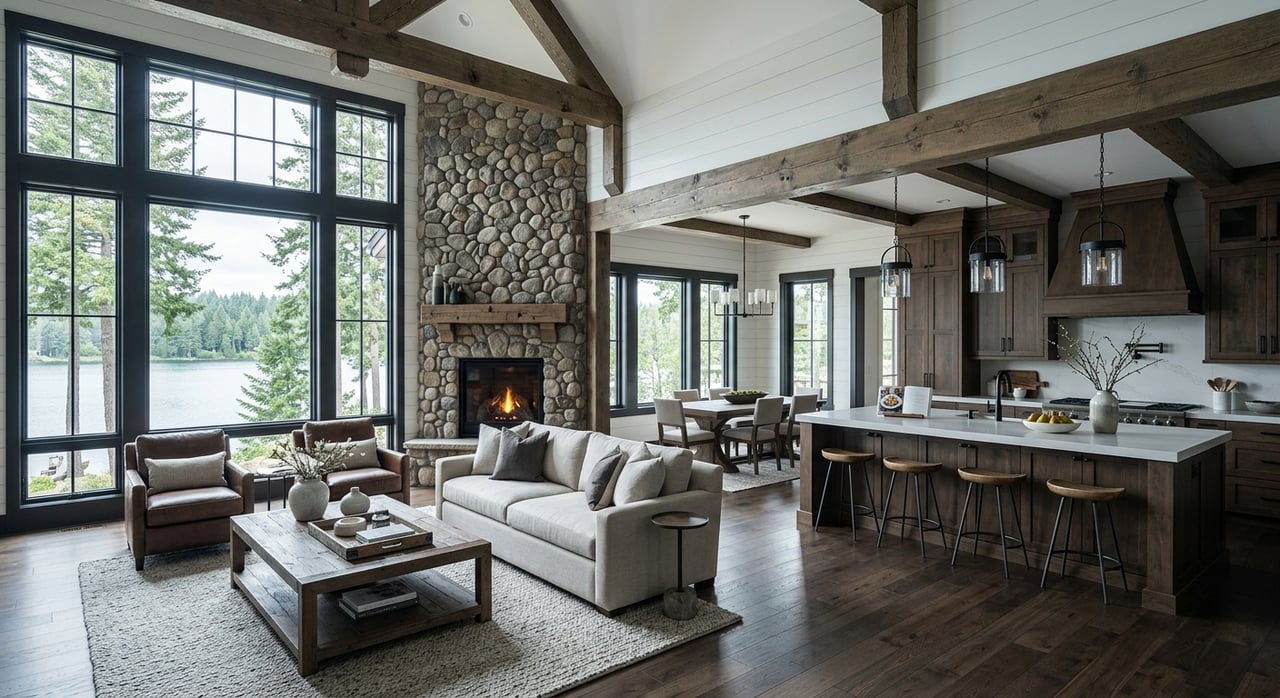
Views are one of the strongest price drivers. Wide, long-range lake views often bring the highest premiums. Channel or marina views can add convenience for active boaters, though they may come with more boat traffic and noise. Obstructed views from trees or nearby structures sometimes improve with selective clearing or design solutions, but you should weigh costs and approvals.
When you compare properties, group them by view quality and note how that aligns with price per waterfront foot. Many buyers will accept a steeper lot or longer driveway to secure an unobstructed, long-range view.
Proximity to marinas and services
Being close to marinas, fuel, and public ramps improves day-to-day usability, especially for owners without a private dock or when docking is limited. Immediate proximity often adds value for active boaters. Too close to busy marinas, however, can introduce noise, congestion, and view impacts.
Consider how distance, traffic patterns, and public access points support the way you plan to use the property.
Road and utility access
Safe, year-round road access and reliable utilities are essential. Check the driveway grade, whether the road is public or private, who maintains it, and if emergency vehicles can turn around. Verify power, water, broadband, and septic feasibility.
Poor access or long, steep private drives shrink the buyer pool and often require price concessions. Secluded or gated access can add value for privacy if the essentials are in place.
How to compare lots in Crane Hill
Group by water attributes first
Start with the water, not the house size or price. Group comparables by:
- Waterbody and management
- Frontage type (cove, channel, open lake, association/common)
- View quality (panoramic, partial, obstructed)
- Dock capability and water depth
Mixing tiers leads to unreliable adjustments because buyers treat these features as primary, not secondary.
Use per-front-foot carefully
Price per waterfront foot can be useful when frontage quality is similar across properties. On irregular lots, narrow coves, or where depth and shoreline differ, combine per-front-foot with usable acreage and expected build or improvement costs.
Apply paired-sales and qualitative adjustments
Look for sales with only one key difference to estimate an adjustment. Document changes related to water depth, dock capability, shoreline condition, access, view quality, proximity to marinas, and slope. When paired sales are scarce, blend agent feedback, buyer preferences, and a land-plus-improvement approach to triangulate value.
Net out improvement costs
Estimate the cost of work a buyer would need to complete and net it from the comparable’s price. Examples include dock construction, retaining walls, dredging, tree clearing for views, septic repairs, driveway paving, and erosion control. Buyers typically discount for both the cost and the risk of executing the project.
Value non-replicable features
Scarce features often act as multipliers rather than simple add-ons. Uncommon attributes like a private cove, long unobstructed vistas, or adjacency to protected land can drive outsized premiums. Document the scarcity and buyer demand to support your case.
Local permits, rules, and risks to check
Flood and elevation
Confirm FEMA flood zones to understand insurance and lending implications. Local topography and slope interact with flood risk, so a low-lying or flat lot may carry different considerations than a higher, steeper site.
Reservoir management and shoreline rules
Many local lakes are reservoirs with utility or other agency oversight. Rules can govern dock size, type, and shoreline modifications. Before assigning value or planning projects, confirm which waterbody you are on and who manages it.
State and federal permits
Shoreline disturbance, dredging, and certain septic or water-quality work may require permits from state agencies and potentially the U.S. Army Corps of Engineers. Build timelines and budgets should reflect permit lead times and conditions.
Property records and taxes
Cullman County parcel maps, recorded easements, and covenants influence usability and marketability. Review any HOA restrictions on docks, exterior materials, or building height, along with road maintenance obligations.
Water quality and seasonal conditions
Seasonal algae or sedimentation can affect desirability. Ask for available monitoring data and historical water clarity information. Sellers and agents who can discuss local water conditions with confidence reduce buyer uncertainty.
Quick checklist for buyers and sellers
Pre-listing and pre-offer
- Confirm the waterbody and managing authority.
- Order a recent survey and verify waterfront boundaries and easements.
- Check FEMA flood zone designations.
- Gather records of dredging, bulkheads, shoreline work, and permits.
- Verify road type, maintenance, and emergency access.
- Confirm utilities, including septic feasibility and broadband options.
- Measure or obtain water depth near likely dock locations.
- Map nearby marinas, public ramps, and typical boat traffic.
Inspection and due diligence
- Review soil and perc test results.
- Assess shoreline stability and any erosion concerns.
- Evaluate tree coverage and view corridors, plus any approvals needed for clearing.
- Confirm dock permitting history and transferability of existing docks.
- Price out anticipated improvements and maintenance.
Red flags that affect value
- High-risk flood zones without mitigation options.
- Ongoing or severe shoreline erosion.
- Dock restrictions or drawdowns that limit practical boating access.
- Private roads with unclear maintenance and poor emergency access.
- Nearby development that could impact views or noise.
Communicating value without hard numbers
You can explain price positioning by classifying properties into clear tiers like deep-water with panoramic views, deep-water with channel views, shallow-water in a private cove, or limited access with no dock. This approach helps set expectations without rigid percentages.
When presenting comps, annotate the differences that justify adjustments. Translate physical costs into their likely impact on offers by netting expected project costs and a reasonable risk buffer. Encourage buyers to model total ownership cost, including maintenance, insurance, possible shoreline work, and any private road assessments. Encourage sellers to document improvements and permits to reduce uncertainty and support a premium.
Ready to evaluate a Crane Hill waterfront property with confidence? For local context on Smith Lake micro-markets, dock rules, and how depth, slope, and shoreline condition play out in real offers, reach out to Team Sparkman. We will walk you through a practical plan to buy or sell with clarity.
FAQs
What affects Crane Hill waterfront prices the most?
- Core water attributes lead: waterbody and management, frontage type, view quality, and dock capability, followed by slope, shoreline condition, access, and proximity to services.
How should I compare two Crane Hill lake lots?
- Group them by water attributes first, then adjust for slope, shoreline, access, and improvement costs, netting out any work a buyer would need to do.
Are docks guaranteed on Crane Hill properties?
- No. Dock rules depend on the specific waterbody and managing authority, and many shoreline changes require permits, so always confirm feasibility before relying on dock access.
Does being near a marina help or hurt value?
- It can do either. Close access boosts convenience for boaters, but heavy traffic, noise, and view impacts near busy marinas can reduce appeal for some buyers.
How does lot slope impact my budget and resale?
- Steeper lots may increase foundation, driveway, and septic costs but can deliver premium views; gentle slopes are easier to build on and access, with typically lower costs.
What should I check about road and utility access?
- Confirm road type and maintenance responsibility, driveway grade, emergency vehicle access, and availability of electric, water, broadband, and septic feasibility before closing.